


Rest Day: Did You Really Lose Muscle?
The feeling of muscle shrinkage on a rest day is a psychological and physiological phenomenon, distinct from actual muscle loss.
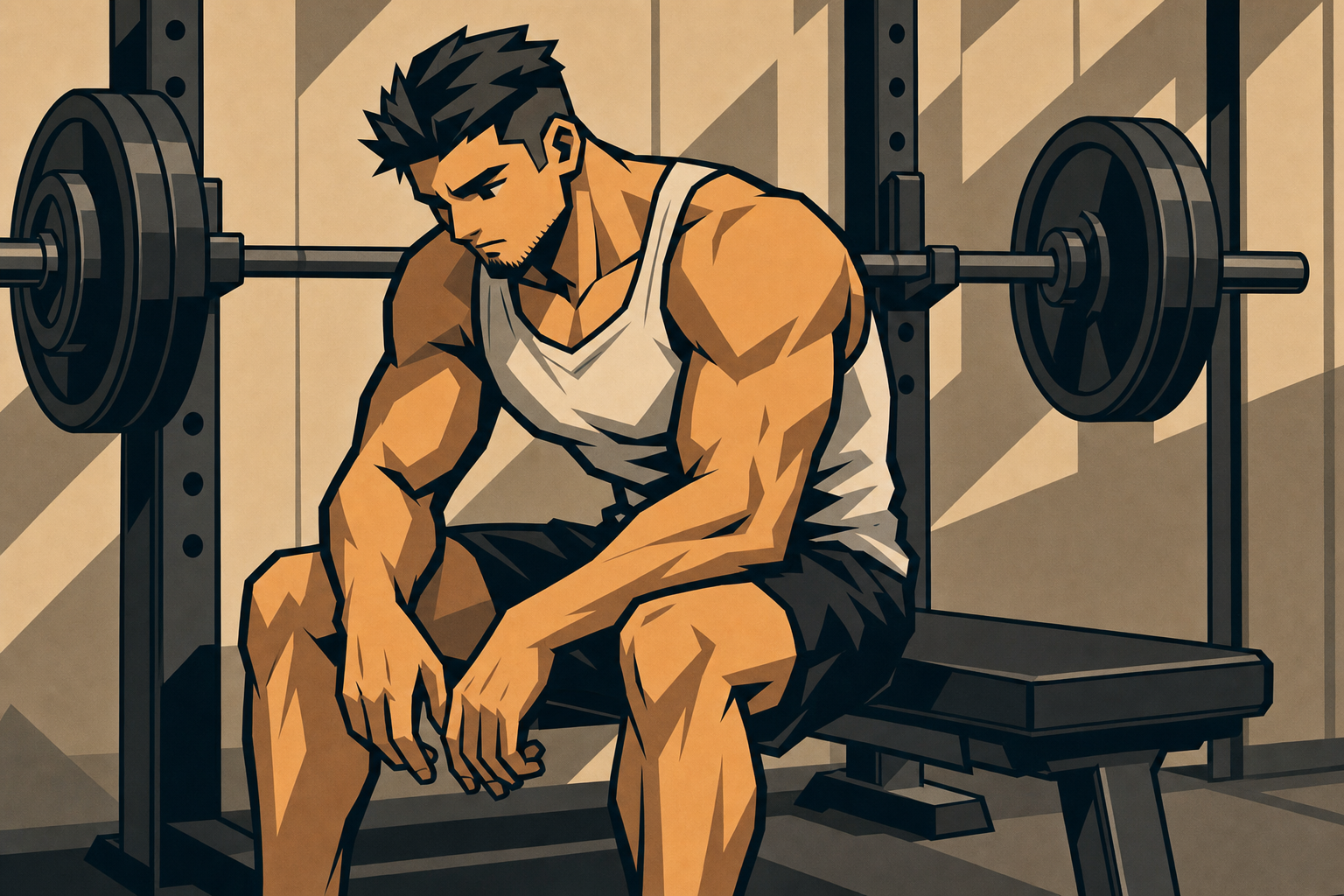
Have you ever experienced this: after training hard, you finally schedule a rest day, only to look in the mirror and feel like your shoulders have shrunk, your arm definition has disappeared, and your entire body looks "soft"?
You start to worry, did you regress because you didn't train yesterday? This feeling is common among almost all dedicated trainees.
But Coach Kai wants to tell you directly: what you feel and what is actually happening in your body are two completely different things. This article will help you clarify whether the feeling of "muscles shrinking on a rest day" is a psychological effect, a normal physiological phenomenon, or actual muscle loss. Understanding this difference will allow you to plan your training rationally, not out of fear.
When Do Muscles Grow?
Muscles grow during the 48 to 72-hour recovery period after training; rest days are when actual muscle growth occurs.
Weight training itself is a process of "destruction." Every set of squats, every bench press, every deadlift you do at the gym is putting stress on muscle fibers, causing microscopic tears.
What truly makes muscles grow bigger and stronger happens after you leave the gym—your body initiates repair mechanisms, protein synthesis increases, and muscle fibers heal, growing back thicker than before.
According to sports physiology research, the peak of protein synthesis typically occurs about 48 hours after training and begins to decline after 72 hours. This means that rest days are not a training hiatus, but rather the time when actual muscle growth is taking place.
If you force yourself to continue training the same muscle group during this period because you're "afraid of losing muscle," you're interrupting not regression, but the ongoing growth process.
Three Real Reasons for "Feeling Muscle Shrinkage" on a Rest Day
The "shrunken feeling" on a rest day comes from diminishing pump, easing DOMS, and changes in glycogen and water, not muscle loss.
So, why do you feel like you've shrunk when you're actually recovering? There are several well-documented physiological mechanisms behind this.
Reason 1: Diminished Muscle Pump
During training, a large amount of blood rushes into the muscle groups you're using, causing a temporary state of "engorgement," commonly known as the "pump." This state makes muscles look fuller, bigger, and more defined.
But Coach Kai makes it clear: the pump is a byproduct of training, not the true state of the muscle. A few hours after training, this engorgement effect subsides, and the muscles return to their original size.
When you look in the mirror on a rest day, without this pump, you naturally feel "shrunken"—but that's just you returning to your baseline state, not regressing.
Reason 2: Alleviated Tightness from DOMS
After high-intensity training, muscles undergo an inflammatory response during repair, leading to Delayed Onset Muscle Soreness (DOMS). This inflammation and soreness keep your muscles in a "tight and swollen" state, making them appear fuller.
As you enter the rest and recovery phase, the inflammation gradually subsides, and this tight, full feeling also disappears.
This isn't muscle loss; it's a normal recovery process.
Reason 3: Changes in Water and Glycogen
When muscle tissue stores glycogen, it also stores water (approximately 3 grams of water per gram of glycogen). On a rest day after training, your activity level decreases, and your dietary plan might also change, affecting the fullness of glycogen and, consequently, the visual appearance of your muscles.
When analyzing InBody data after a two-week training break, Coach Kai specifically mentioned this phenomenon: the skeletal muscle numbers barely decreased, but the visual definition of the shoulders and arms clearly diminished.
The numbers didn't change, but the feeling of shrinkage was there—this perfectly illustrates that changes in visual physique are largely influenced by water and the state of engorgement, and not entirely by actual muscle mass gain or loss.
How Long Does Real Muscle Loss Take to Occur?
For those with a training base, significant muscle loss only occurs after more than a month of complete inactivity; a single rest day is not in that league.
Since the "shrunken feeling" on a rest day is mostly a psychological and short-term physiological phenomenon, how long does real muscle loss actually take? Coach Kai's answer is clear: for individuals with a solid training foundation, it typically takes over a month of complete inactivity to start experiencing significant muscle loss.
He illustrates with an example of a friend in Hong Kong: the gym was closed for two whole months due to policy, and his friend indeed experienced some decrease in muscle mass and strength. However, after the gym reopened, it only took him about two weeks to restore his strength and muscle condition to 70-80% of what it was. The mechanism behind this is what we know as "muscle memory."
During muscle growth, the number of cell nuclei (myonuclear) increases. The key is that these myonuclei do not disappear even if the muscle atrophies after a training break. When you resume training, the residual myonuclei can support faster hypertrophy of muscle fibers, which is why individuals with a training base recover much faster than beginners.
Rest Anxiety is Actually a Good Sign
Fear of rest is a positive sign of training commitment, but it shouldn't lead you to neglect recovery.
Coach Kai offers an interesting interpretation of the "fear of losing muscle if I don't train for one day" mindset: this anxiety itself indicates that your physique is about to improve.
From being completely sedentary, to regular training, to eventually worrying about regressing if you miss a day—this is a process of mental transformation, reflecting your increasing sense of control over your body's condition. This "fear of rest" is a normal psychological phase of transition, which will eventually evolve into a more composed mastery of your training rhythm.
However, if this anxiety leads you to neglect recovery and force yourself to train, then it transforms from a positive motivator into a source of self-harm. What you need to do is channel this energy into emphasizing "quality recovery" rather than fearing "rest days."
Overtraining is the Real Enemy
Most people's issue is insufficient rest, not insufficient training; exceeding recovery limits only hinders supercompensation.
After observing a large number of regular gym-goers, Coach Kai came to a conclusion that surprises many: most people don't train too little; they rest too little.
In his late twenties, he once attempted a twice-a-day training schedule, which resulted in a month of recurring colds and a significant drop in his immune system. This demonstrates that training volume beyond the body's recovery capacity not only fails to bring progress but also leads to systemic negative effects.
Each large muscle group has a training "sweet spot," typically ranging from twelve to twenty sets per week, varying by individual. Once this upper limit is exceeded, muscles not only stop growing but may even regress.
Your body needs a balance between stress and recovery. Provide sufficient training stimulus, then allow ample recovery time for the body to supercompensate—to become stronger than before training. If continuous training doesn't give the body enough time to complete this supercompensation, all efforts will only lead to stagnation, or even regression.
What is the Scientific Approach to Scheduling Rest?
Rest days should be flexibly adjusted based on training intensity and recovery status, not by rigid fixed-cycle formulas.
So, how should rest days be scheduled? Coach Kai's view is that rest days should not be a fixed formula, but rather adjusted flexibly based on training intensity and individual recovery capacity.
He highlights a concept often overlooked: your body doesn't know what day of the week it is. It responds to recovery status, training stimulus, and accumulated fatigue, not the date on a calendar. If your training schedule requires an eight-day cycle for full recovery, then use an eight-day cycle, and don't sacrifice recovery quality to fit into a seven-day framework.
A few practical indicators to determine if you need rest:
- Are the target muscle groups from your last workout still significantly sore?
- Is your motivation and focus for today's training noticeably low?
- How has your sleep quality been recently? Do you feel persistently fatigued?
- Was your total training volume last week higher than usual?
If multiple answers to the above questions are affirmative, then resting today isn't laziness; it's a necessary investment.
Sleep: The Underestimated Key to Muscle Growth
Sleep is the core period for muscle synthesis; insufficient sleep raises cortisol and negates the effects of training and diet.
When discussing recovery, sleep cannot be ignored. Coach Kai clearly states that most muscle synthesis in the human body occurs during sleep. The peak time for testosterone (a hormone that aids muscle synthesis) secretion is also during sleep.
Conversely, insufficient sleep leads to elevated cortisol (a stress hormone). Cortisol breaks down muscle and promotes fat storage. This means that you can train very hard and eat a precise diet, but if you consistently get insufficient sleep, the effectiveness of all these efforts will be greatly diminished.
Coach Kai recommends at least seven hours of sleep daily, with eight hours being even better. If your current problem is severe sleep deprivation, then prioritizing sleep should be higher than adjusting your training schedule or diet plan.
Recovery is Active, Not Passive Waiting
Recovery is an active process, achieved through adequate sleep, protein intake, stretching, and stress management.
Coach Kai particularly emphasizes a commonly misunderstood concept: recovery does not equal resting. Simply lying still does not equate to effective recovery.
True recovery is an active physiological process that requires:
- Sufficient sleep quality
- Adequate protein and nutrient supplementation
- Appropriate stretching and relaxation
- Effective stress management
Performing static stretching after training (recommended after training or on rest days, not before training), supplementing with quality protein and carbohydrates, and ensuring adequate sleep—these are all active behaviors that facilitate actual recovery, not optional add-ons.
Your investment in your body on a rest day determines the upper limit of your next training session's quality.
Conclusion: Rest Days are Growth Days, Not Stagnation Days
Rest days are part of the training program, providing space for the body to supercompensate, thus enabling long-term progress.
Returning to the initial question: did you really lose muscle after one day of rest? The answer is: no, you didn't.
The perceived shrinkage is a normal phenomenon of diminishing pump, alleviating DOMS, and changes in water content. Actual muscle loss requires weeks or even months of complete disuse to occur; a single day of rest is not in that league.
On the contrary, those who, out of fear of losing muscle, never rest and continuously overtrain are actually hindering their own muscle growth. This is because they constantly cause damage but never give their body enough time and space to complete repair and supercompensation.
Frequently Asked Questions
Does one day of rest truly cause muscle loss?
No. For individuals with a training foundation, it typically takes over a month of complete inactivity to start experiencing significant muscle loss. One day of rest is several orders of magnitude away from actual muscle loss.
Why do my muscles feel smaller on a rest day?
There are three main reasons: the diminishing muscle pump from training, the alleviation of tightness caused by DOMS, and changes in water and glycogen storage in the muscles. These are normal short-term physiological phenomena, not actual muscle loss.
How many rest days should I take each week?
There is no fixed formula for the number of rest days; it should be flexibly adjusted based on training intensity and individual recovery capacity. Coach Kai points out that your body doesn't know what day of the week it is. If your training schedule requires an eight-day cycle for full recovery, then use an eight-day cycle, and don't sacrifice recovery quality to fit into a seven-day framework.
How important is sleep for muscle growth?
Extremely important. Most muscle synthesis in the human body occurs during sleep, and the peak of testosterone secretion also happens at this time. Insufficient sleep can raise cortisol levels, leading to muscle breakdown. Coach Kai recommends at least seven hours of sleep daily, with eight hours being even better.
After a long break from training, how long does it take to recover?
According to Coach Kai's shared case, after a gym closure of two full months, it took about two weeks of resuming training to restore muscle strength and condition to 70-80% of what they were. This is because myonuclei do not disappear after a training break, allowing individuals with a training foundation to recover much faster than beginners.
The content of this article is excerpted from Coach Kai's YouTube channel videos. Training advice is for reference only; if you experience physical discomfort or injury issues, please consult a professional physician or physical therapist.


